Introduction
Keeping carpets, upholstery, and fabric surfaces clean can be a challenge, especially in homes where everyday activities leave behind spills, muddy footprints, food marks, and other small messes. Sofas, dining chairs, area rugs, car seats, and floor mats are particularly vulnerable because they are used frequently and may not be easy to clean with ordinary household equipment. While a vacuum cleaner can remove loose dirt, it does not perform the same task as a machine designed to wash fabric surfaces and extract liquid from them.
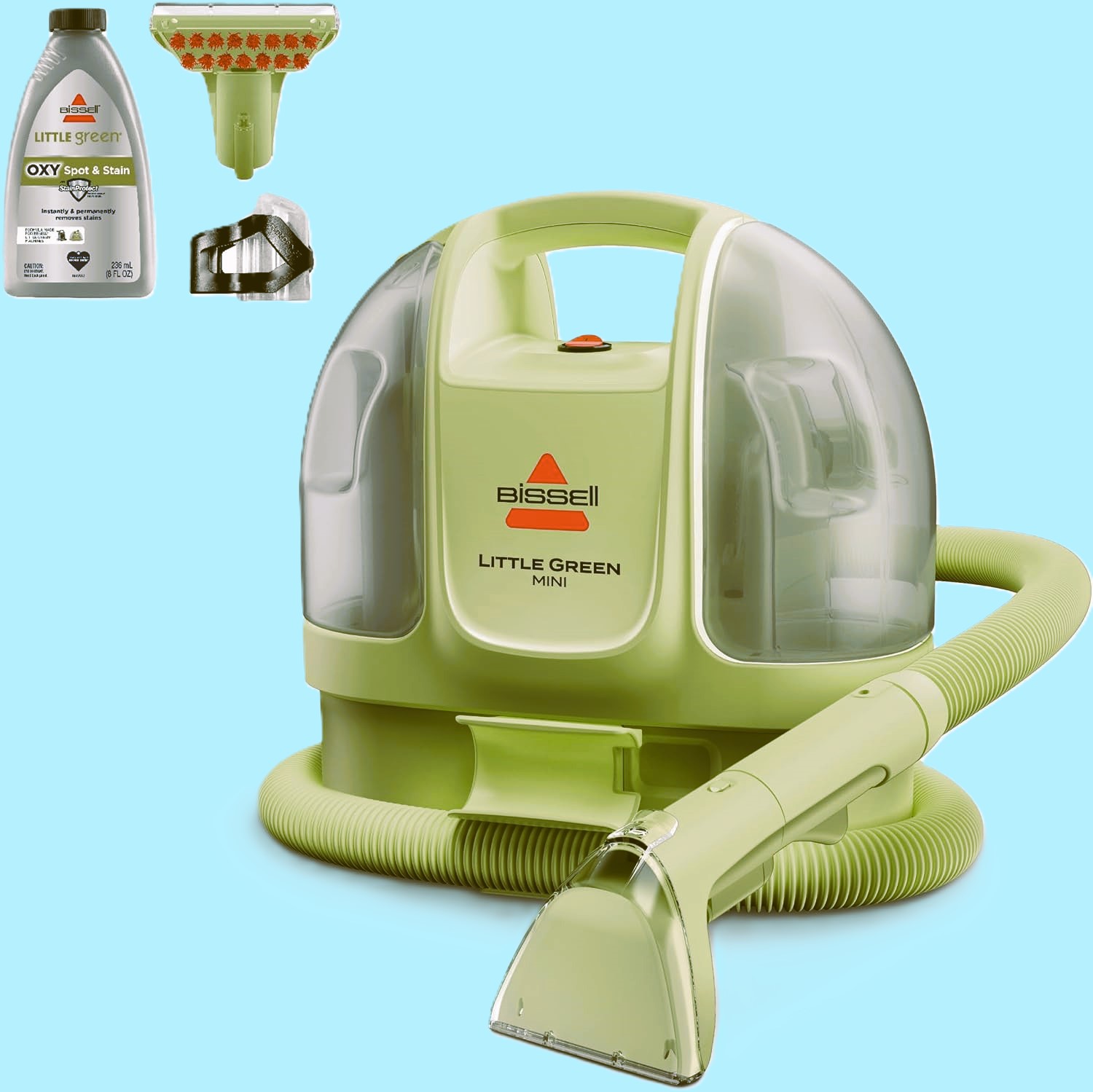
The BISSELL Little Green Mini Portable Carpet Cleaner, model 4075, is a compact cleaning appliance intended for targeted cleaning tasks around the home and inside vehicles. Its design combines portability with a cleaning process that applies water and cleaning solution to suitable surfaces, agitates the affected area, and extracts the resulting moisture along with loosened dirt. Rather than serving as a replacement for every type of floor-cleaning equipment, it is intended to address smaller messes that benefit from a more focused approach.
This model comes in a Tea Green color and includes features such as a 4-inch tough stain tool and a HydroRinse self-cleaning tool. These components are relevant to people who want to understand how a portable carpet cleaner works, what kinds of surfaces it may help maintain, and what is involved in cleaning the machine after use.
However, a compact extraction cleaner is not automatically appropriate for every material or every stain. Fabric construction, manufacturer care instructions, the age of a stain, and the cleaning solution used can all influence the outcome. Understanding these factors before using the appliance can help prevent avoidable damage and establish realistic expectations.
This guide explores the BISSELL Little Green Mini Portable Carpet Cleaner 4075 in detail, including its main features, practical applications, maintenance considerations, intended users, and differences between portable cleaners and other household cleaning categories.
Understanding the BISSELL Little Green Mini Portable Carpet Cleaner 4075
The
belongs to the category of portable carpet and upholstery extraction cleaners. These appliances are designed to treat localized areas rather than clean an entire home in the way a full-size carpet-cleaning machine might.
The distinction is important. A traditional vacuum cleaner primarily removes loose particles from a surface. A portable extraction cleaner introduces moisture and cleaning solution to a compatible surface, helps loosen embedded material, and extracts dirty liquid into a collection tank.
This approach can be useful for fabric surfaces that have absorbed a spill or developed visible marks. For example, a small food stain on a removable-looking but fixed sofa cushion may require a different cleaning method from dust on a hardwood floor. A portable upholstery cleaner provides an option for the former, provided the fabric manufacturer permits water-based cleaning.
The model’s compact format is intended to make localized cleaning more manageable. Instead of preparing a large machine for a small accident, a household may be able to bring a portable unit to the affected area. Its usefulness therefore depends not only on its cleaning mechanism but also on how frequently small cleaning tasks arise in a particular household.
The product’s listed accessories also provide clues about its intended applications. The 4-inch tough stain tool is designed for targeted cleaning, while the HydroRinse tool addresses maintenance of the cleaning hose. Together, these features make it relevant to discussions about spot cleaning, upholstery care, and vehicle interior maintenance.
As with any appliance, the exact package contents, specifications, operating instructions, and included accessories should be confirmed on the current product listing and in the manufacturer’s documentation.
Key Features of the BISSELL Little Green Mini
1. Compact, Portable Design
Portability is one of the main characteristics of a small extraction cleaner. Large carpet-cleaning machines are designed to cover substantial floor areas, whereas a mini cleaner is intended to handle smaller jobs with less equipment to move around.
This format may be convenient when cleaning a single sofa cushion, a localized carpet stain, or a small section of a vehicle’s upholstery. It can also make storage easier for households that do not have much room for bulky cleaning appliances.
A compact machine may be particularly useful in apartments, smaller homes, or households where full-room carpet washing is relatively infrequent. Someone who already owns a vacuum cleaner but wants an additional option for accidental spills may find the two appliances serve different purposes.
Nevertheless, portability should not be confused with unlimited operating capacity. A smaller cleaner is generally more appropriate for localized tasks than for repeatedly washing large rooms or extensive areas of carpet. The time needed to refill the clean-water tank, empty the dirty-water tank, and treat multiple sections should be considered when estimating the effort involved in a larger job.
The practical advantage is the ability to focus on individual problem areas rather than prepare a full-size machine for every small spill.
2. Targeted Cleaning With the 4-Inch Tough Stain Tool
The included 4-inch tough stain tool is intended to help direct cleaning action toward a limited area. A tool of this kind can be useful when a spill is concentrated in one location rather than spread across an entire carpet or upholstered surface.
Consider a few everyday situations:
- A small coffee spill on a compatible fabric cushion.
- Mud transferred onto a fabric-covered vehicle seat.
- A food mark on an area rug.
- A localized stain on an upholstered dining chair.
- A small patch of dirt on a carpeted surface.
In these cases, a targeted tool allows the user to work on the affected section without treating a much larger area unnecessarily.
The cleaning process typically involves applying an appropriate amount of cleaning solution, working over the affected area with the tool, and extracting the loosened dirt and moisture. The exact technique depends on the product instructions, the fabric, and the type of stain.
It is important to distinguish between a tool designed for tough stains and a guarantee that every stain will disappear. Some substances penetrate deeply into fibers or react with dyes and finishes. Older stains may also have changed chemically over time, making them more difficult to remove.
For this reason, it is sensible to treat fresh spills promptly when possible, avoid aggressive scrubbing, and test the cleaning method in a concealed area before working on a visible section.
3. HydroRinse Self-Cleaning Tool
Cleaning equipment requires maintenance, particularly when it handles dirty water, food residue, and other material removed from upholstery. The HydroRinse self-cleaning tool included with this model is intended to help rinse the machine’s hose after cleaning tasks.
This feature addresses a practical issue that can otherwise be overlooked: residue left inside a hose may contribute to unpleasant odors or interfere with hygienic storage if the appliance is not maintained properly.
The general principle behind a hose-rinsing accessory is straightforward. A suitable rinsing procedure helps flush residual dirt and cleaning solution from the internal pathway through which liquid and extracted material travel. This is separate from cleaning the machine’s tanks, exterior, and other removable components.
The HydroRinse tool should be used according to the manufacturer’s instructions. Users should not assume that it automatically cleans every internal component or eliminates the need for routine maintenance.
After using the appliance, a sensible care routine includes checking the dirty-water tank, following the prescribed rinsing procedure, and allowing the relevant parts to dry as directed. The collection tank may need to be emptied and cleaned separately.
These steps are especially relevant when the cleaner is used for food spills, pet-related messes, or vehicle interiors, where dirt and organic residue can accumulate.
4. Cleaning Upholstery and Fabric Surfaces
Upholstery can be difficult to maintain because its appearance depends on more than the visible surface. Dust and dirt can become trapped between fibers, while spilled liquids may penetrate the fabric and underlying padding.
A portable extraction cleaner is intended to help address certain types of localized contamination by combining a cleaning solution with liquid extraction. Depending on the material and the stain, this may help lift dirt that a dry vacuum cannot remove.
Potential applications include suitable fabric sofas, armchairs, dining chairs, and other upholstered items. Area rugs and carpeted sections may also be candidates, provided their materials and backing are compatible with the cleaning method.
Before using any water-based cleaning appliance on furniture, check the manufacturer’s care label. Upholstery marked for dry cleaning only, or identified as unsuitable for water-based cleaning, should not be treated with an extraction cleaner unless the furniture manufacturer or a qualified cleaning professional confirms that the method is appropriate.
Some materials can shrink, develop water rings, bleed color, or change texture when exposed to moisture. Excess liquid may also reach the padding beneath the fabric.
For compatible upholstery, controlled application and thorough extraction are important. The objective is to clean the affected area without unnecessarily soaking the surrounding material.
5. Use for Car Interior Detailing
Vehicle interiors contain several fabric surfaces that can collect dirt during ordinary use. Seats, carpeted floors, fabric door panels, and removable floor mats may accumulate dust, food particles, mud, and liquid spills.
A portable carpet cleaner may offer a practical way to address localized marks on compatible fabric components without removing every item from the vehicle or arranging a full interior detailing service.
For example, a family car may develop small stains from snacks and drinks. A vehicle used for commuting may accumulate dirt around the driver’s footwell. A car that frequently transports children or sports equipment may need occasional spot cleaning of its seats and mats.
The compact format of a mini cleaner may be useful for these tasks because the user can focus on one section at a time. However, cleaning a complete vehicle interior can still require substantial time, especially when several seats and floor areas need attention.
Not every vehicle surface should be cleaned using the same method. Leather, synthetic leather, delicate trim, electrical controls, and surfaces containing sensitive components require different care. Water-based extraction should be limited to compatible fabric areas, and moisture should be kept away from electrical equipment and other components that must remain dry.
Vehicle owners should also consider ventilation and drying time. Fabric should be allowed to dry fully before the vehicle is used normally, especially if damp materials could contribute to lingering odors.
6. Tea Green Color and Household Storage
The Tea Green finish gives the appliance a distinctive appearance compared with more conventional neutral-colored cleaning equipment.
Color is primarily a matter of personal preference rather than cleaning performance. However, the appearance of a household appliance can influence where someone chooses to store it or whether they prefer to keep it in an accessible utility area.
For households that keep cleaning equipment in a visible laundry space, storage cabinet, or utility corner, the color may be a minor consideration when choosing between otherwise similar appliances.
The more important practical questions remain the appliance’s dimensions, weight, storage requirements, cord management, and ease of access. Those details should be checked against the current manufacturer’s specifications before deciding where to keep the machine.
A compact cleaner is most useful when it can be retrieved without too much effort. If the appliance is difficult to access or inconvenient to prepare, it may be used less frequently, even when it is suitable for the task.
How the BISSELL Little Green Mini Can Be Used
The appliance is intended for localized cleaning, but its practical applications depend on the material being treated and the nature of the mess. The following examples illustrate common household situations.
Cleaning Small Carpet Spills
Carpet spills can become more difficult to manage when liquid spreads into the fibers or dries before being treated. Coffee, tea, juice, and other colored liquids may leave visible marks, depending on the carpet and the substance involved.
A reasonable first step is to remove excess liquid by gently blotting the area with a clean absorbent cloth. Rubbing aggressively can push a stain deeper into the fibers or spread it over a wider area.
Once the carpet’s care requirements have been checked, a compatible extraction cleaner can be used according to its instructions. Apply only the recommended amount of cleaning solution, work over the affected area, and extract the moisture as directed.
The area should not be repeatedly soaked in an attempt to remove a stubborn mark. Excessive moisture can reach the carpet backing or underlying floor and may cause problems that are more difficult to resolve than the original spill.
If the stain remains, repeating the process may not be appropriate. The substance could require a different treatment, and certain stains are better handled by a professional.
Refreshing Fabric Sofas and Armchairs
Furniture often receives frequent contact from hands, clothing, pets, and everyday activities. Even when a sofa looks reasonably clean, individual cushions or armrests may develop visible marks.
For compatible upholstery, a portable cleaner can be used to address specific areas rather than treating the entire piece of furniture. This may be useful after a small food spill or when a frequently used cushion develops a localized dirty patch.
Before starting, inspect the fabric for loose threads, color instability, and signs of damage. Test the cleaning method on an inconspicuous section, following the furniture manufacturer’s guidance.
It is also worth remembering that cleaning a single mark can sometimes produce a difference in appearance between the treated section and the surrounding fabric. In certain materials, cleaning a broader, evenly bounded area may produce a more consistent appearance, but this should only be done when the upholstery can safely tolerate the method.
Drying deserves particular attention. A cushion that feels dry on the surface may still retain moisture beneath the fabric. Allow sufficient drying time and provide ventilation where appropriate.
Maintaining Dining Chairs and Other Fabric Furniture
Dining chairs are exposed to food crumbs, beverage spills, and marks from regular use. Their smaller surfaces can make them suitable candidates for targeted cleaning, assuming the upholstery is compatible.
A compact extraction cleaner may also be useful for fabric-covered stools, upholstered benches, and certain fabric panels around the home.
The best approach is preventive rather than reactive. Removing loose crumbs promptly, vacuuming fabric surfaces regularly, and addressing fresh spills can reduce the amount of intensive cleaning required later.
For older or delicate furniture, consult the manufacturer before introducing moisture. Furniture construction varies considerably, and the visible fabric may be attached to padding or backing that is sensitive to water.
Cleaning Compatible Vehicle Seats and Floor Mats
Vehicle seats and floor mats can develop a mixture of dry dust, oily residue, and liquid stains. These contaminants may need different treatments, so identifying the type of dirt is important before starting.
Dry debris should generally be removed first with a vacuum cleaner. Loose grit left on the surface can make the cleaning process less efficient and may contribute to unnecessary abrasion.
Next, check whether the seat fabric or mat is suitable for water-based extraction. If it is, use the portable cleaner according to its instructions, paying attention to the amount of solution applied and the need for thorough moisture extraction.
Floor mats should be treated in accordance with their material and construction. Rubber mats, for instance, usually require a different cleaning method from carpeted mats.
Avoid using the appliance near exposed electrical connections, electronic controls, or sensitive interior components. Adequate drying and ventilation are important before the vehicle returns to normal use.
Addressing Pet-Related Messes
Homes with pets may experience occasional muddy paw marks, small spills, or other localized contamination on compatible carpet and upholstery.
A portable extraction cleaner may help with certain surface-level messes, but the correct approach depends on the material and the substance involved. Organic stains can be particularly challenging because visible discoloration and lingering odor may require different treatments.
For urine or other biological contamination, a cleaning product specifically formulated for the problem may be more suitable than a general carpet-cleaning solution. It should be confirmed as compatible with both the surface and the appliance.
Do not assume that ordinary extraction will completely remove odor-causing residue from deep padding. Extensive contamination may require specialized treatment or professional cleaning.
The dirty-water tank and hose should be cleaned promptly after use, following the manufacturer’s instructions. This is one situation in which the HydroRinse accessory may be especially relevant to routine equipment care.
Handling Everyday Household Accidents
Small accidents happen in many settings: a dropped snack, a muddy shoe print, a spilled drink, or a mark left by a frequently used chair.
For households that encounter these situations regularly, a portable extraction cleaner may provide an additional option between basic spot cleaning and hiring a professional service.
The key is to choose the right cleaning method for the surface. A water-based extraction appliance is not intended for every floor type, every fabric, or every household material. Hard surfaces, delicate textiles, and water-sensitive materials may require entirely different tools.
Keeping the appliance clean, accessible, and ready for appropriate tasks can make it easier to respond to small messes without turning every incident into a major cleaning project.
Who May Find This Type of Cleaner Suitable?
The BISSELL Little Green Mini Portable Carpet Cleaner 4075 may be relevant to several types of households.
Apartment Residents and People With Limited Storage
People living in apartments or smaller homes may prefer compact appliances that do not occupy much storage space. A mini extraction cleaner can serve as a supplementary tool for localized spills without requiring a full-size carpet-cleaning machine.
However, the actual storage footprint should be checked against the available space. Compact does not mean that no room is needed for the machine, its accessories, and any cleaning products used with it.
Families With Children
Children can bring food, drinks, mud, and other everyday messes into contact with carpets and furniture. A portable cleaner may be useful when these accidents occur on compatible fabric surfaces.
Its role is primarily to help with localized cleaning. Regular vacuuming, prompt spill management, suitable protective measures, and appropriate furniture care remain important parts of household maintenance.
Pet Owners
Pet owners may appreciate having a dedicated option for cleaning certain fabric surfaces after small accidents. The machine’s extraction method may be relevant to compatible carpets, rugs, and upholstery.
Nevertheless, households dealing with frequent accidents or contamination that penetrates deeply into padding may need a more specialized cleaning approach. The appliance should be viewed as one component of a broader cleaning routine rather than a complete solution to every pet-related problem.
Drivers and Vehicle Owners
People who spend substantial time in their cars may want to maintain the appearance of fabric seats and carpeted sections. A portable cleaner may be useful for occasional spot cleaning and certain interior detailing tasks.
It may be less convenient for someone who needs to clean several vehicles or perform extensive detailing frequently. In such situations, equipment designed for more demanding workloads may be worth considering.
People Who Prefer Targeted Cleaning
Some households do not need to wash entire carpets regularly but still encounter occasional stains. For these users, a spot-cleaning appliance may fill a specific gap between vacuuming and professional cleaning.
The strongest reason to consider this category is a recurring need for targeted extraction rather than a desire to replace every other cleaning tool.
Important Things to Consider Before Using the Cleaner
A portable extraction cleaner can be useful, but its results depend on several practical factors. Understanding them helps establish realistic expectations and reduces the risk of damaging fabrics.
1. Check the Material’s Cleaning Instructions
Not every carpet or upholstered surface can safely tolerate water-based cleaning.
Furniture care labels often use codes to indicate appropriate cleaning methods. Depending on the manufacturer, these may include water-based cleaning, solvent-based cleaning, professional cleaning, or restrictions on wet cleaning.
If a surface is marked as unsuitable for water-based cleaning, do not assume that a small amount of moisture will be harmless. Certain fabrics can shrink, bleed color, develop rings, or become distorted.
When the care label is missing or unclear, consult the furniture or carpet manufacturer before proceeding.
2. Identify the Stain Before Treating It
Different stains behave differently. Water-soluble substances, oily marks, dye-based spills, and biological contamination may need different cleaning methods.
A general extraction cleaner can help with some localized stains, but it cannot guarantee removal of every substance. Heat, age, prior cleaning attempts, and the type of fiber can all affect the result.
Avoid combining cleaning products without clear manufacturer guidance. Some combinations can damage fabrics or create hazardous fumes.
3. Use Compatible Cleaning Solutions
Cleaning solution selection matters as much as the machine itself. A product that is not approved for the appliance may create excessive foam, leave residue, or interfere with its operation.
Use only solutions recommended or permitted by the manufacturer, and follow the specified dilution instructions. Do not assume that stronger concentrations will produce better results.
Excess cleaning product can remain in the fibers and attract dirt later. Using the correct amount helps support a more controlled cleaning process.
4. Understand the Limitations of a Compact Appliance
A mini cleaner is designed for localized work. Large carpeted rooms, extensive upholstery, and heavily soiled surfaces may require more time or equipment with greater capacity.
Cleaning several areas can involve repeated refilling, emptying, rinsing, and repositioning. These steps should be included when deciding whether a compact model suits a particular household.
The appliance may be appropriate for occasional maintenance but less suitable as the primary tool for frequent whole-room carpet washing.
5. Allow Sufficient Drying Time
Moisture management is an important part of fabric cleaning. Even when an extraction appliance removes liquid, some moisture can remain in the fibers and padding.
Drying time depends on the material, the amount of solution used, the room’s temperature, humidity, and airflow. Thick upholstery may take longer to dry than a thin fabric surface.
Ventilation can help, but follow the material manufacturer’s care instructions. Avoid using furniture or vehicle seats normally while they remain excessively damp.
Persistent moisture can contribute to unpleasant odors and, in some circumstances, microbial growth. If an area becomes saturated, consider whether professional assistance is appropriate.
6. Maintain the Machine After Each Use
A portable extraction cleaner collects dirty liquid, so regular maintenance is essential.
A practical routine includes:
- Emptying the dirty-water tank promptly.
- Cleaning the tanks and removable parts as directed.
- Using the HydroRinse tool according to its instructions.
- Checking the cleaning tool and hose for residue.
- Allowing the relevant components to dry as recommended.
- Storing the appliance in an appropriate location.
The exact cleaning sequence should come from the product manual. Do not assume that the HydroRinse accessory replaces every other maintenance step.
7. Consider Noise, Reach, and Storage
Before selecting a portable cleaner, consider where it will be used and how often it will be moved.
Noise may matter in apartments or households with sleeping children. The available power-cord length and hose reach may affect how easily the appliance can be positioned around furniture or inside a vehicle.
Check the manufacturer’s published specifications for the model’s dimensions, weight, tank capacities, cord length, hose length, and operating requirements. These details are more useful for evaluating convenience than relying on the word “mini” alone.
8. Check the Warranty and Available Support
Warranty coverage, exclusions, and service arrangements can vary according to the product, seller, and country of purchase.
If the appliance will be purchased for use outside the United States, check whether the seller provides suitable delivery arrangements, electrical compatibility information, warranty support, and access to replacement accessories.
A product listing may not provide every detail required for international use. Confirm these matters before making a decision.
Comparing General Categories of Cleaning Equipment
The BISSELL Little Green Mini is easier to evaluate when compared with the broader categories of cleaning tools available for household use. Each type serves a different purpose.
Portable Extraction Cleaners
Portable extraction cleaners are designed for targeted cleaning of compatible carpets and upholstery. They combine cleaning solution with extraction and are generally intended for localized spills, fabric furniture, and certain vehicle interior tasks.
Their main practical distinction is the ability to treat a limited area without preparing equipment designed for an entire room.
However, the size and capacity of a portable unit can make large jobs time-consuming. They are also unsuitable for materials that cannot tolerate the cleaning method.
The Little Green Mini belongs to this category, with its 4-inch tough stain tool and HydroRinse accessory providing additional context for how the appliance is intended to be used and maintained.
Full-Size Carpet Cleaners
Full-size carpet cleaners are generally intended for broader areas of carpet. Depending on the model, they may offer larger tanks, wider cleaning paths, or features suited to covering rooms more efficiently.
These machines may be more appropriate for households with extensive carpeting or people who routinely clean large areas.
Their trade-offs can include a larger storage footprint, more difficult handling in confined spaces, and greater preparation requirements for small spills.
A portable cleaner and a full-size machine therefore address different needs. Neither category is automatically preferable for every household.
Standard Vacuum Cleaners
Standard vacuum cleaners remove dry debris such as dust, crumbs, hair, and loose dirt. They are important for routine maintenance and can help prevent dry particles from accumulating in carpet fibers.
However, ordinary vacuuming does not perform the same function as wet extraction. It generally cannot remove a liquid stain in the same way that a compatible carpet-cleaning appliance can.
The two categories are complementary. Vacuuming before appropriate wet cleaning can remove loose debris and make it easier to focus on the actual stain.
Steam Cleaners
Steam cleaners use heated water to produce steam for cleaning compatible surfaces. Their operating principles and suitable applications differ from those of extraction cleaners.
Steam is not appropriate for every fabric, adhesive, finish, or household material. Heat-sensitive surfaces may be damaged, and steam cleaning should not be assumed to replace the extraction of dirty liquid from upholstery.
People considering a steam cleaner should evaluate its approved applications separately rather than treating it as interchangeable with a portable carpet extractor.
Professional Upholstery and Carpet Cleaning
Professional cleaning services may be appropriate when dealing with large areas, delicate fabrics, deeply embedded contamination, extensive water damage, or stains that have resisted suitable household methods.
A professional can assess the material and select an appropriate cleaning process. This can be particularly valuable for expensive furniture, natural fibers, or surfaces with unclear care requirements.
The trade-off is the need to arrange a service and potentially pay for work that a household appliance might otherwise handle on smaller, suitable tasks.
For routine spot cleaning, a portable machine may provide an additional option. For difficult or high-risk cleaning situations, professional advice may be more appropriate.
Frequently Asked Questions
What is the BISSELL Little Green Mini Portable Carpet Cleaner 4075 designed to do?
It is a compact extraction cleaner intended for localized cleaning of compatible carpet and upholstery surfaces. Its general purpose is to apply cleaning solution, help loosen dirt, and extract dirty liquid from the treated area.
It is not a replacement for every type of vacuum, carpet washer, or professional cleaning service.
What is the purpose of the 4-inch tough stain tool?
The 4-inch tough stain tool is intended to focus cleaning action on a relatively small area. This can be useful for localized marks on suitable upholstery, carpets, and other compatible fabric surfaces.
Its presence does not mean every stain can be removed. Results depend on the material, stain type, cleaning solution, and technique.
What does the HydroRinse self-cleaning tool do?
The HydroRinse tool is intended to help rinse the cleaner’s hose after use. This supports maintenance by helping remove residual dirt and cleaning solution from the hose pathway.
It should be used according to the manufacturer’s directions and does not eliminate the need to clean the tanks and other relevant components.
Can the Little Green Mini be used on a sofa?
It may be suitable for certain fabric sofas, provided the upholstery manufacturer permits water-based cleaning.
Check the care label, test an inconspicuous area, and avoid excessive moisture. Delicate, solvent-only, or water-sensitive upholstery may require another cleaning method.
Can it be used to clean car seats?
The cleaner may be used on compatible fabric car seats and other suitable textile surfaces. Avoid leather, sensitive trim, electrical components, and any materials that are not approved for water-based extraction.
Follow the vehicle and upholstery manufacturer’s instructions, and allow the cleaned areas to dry fully.
Is it suitable for pet stains?
It may help with certain localized pet-related messes on compatible fabric surfaces. However, removing a visible stain and eliminating an underlying odor are not always the same task.
Some biological contamination requires a specifically formulated cleaning product or professional treatment. Use only solutions compatible with the appliance and the affected material.
Can it clean an entire carpeted room?
A portable cleaner can treat multiple areas, but its compact format is primarily intended for localized cleaning. Covering a large room may require repeated refilling, emptying, and repositioning.
For frequent whole-room carpet washing, a full-size carpet cleaner or professional service may be more appropriate.
Does it replace a vacuum cleaner?
No. A standard vacuum is designed primarily to remove dry debris, while a portable extraction cleaner treats compatible surfaces using moisture and liquid extraction.
For routine care, vacuuming and targeted wet cleaning serve different purposes and may complement each other.
Will it remove old or stubborn stains?
Not necessarily. Older stains may have penetrated deeply into the fibers, reacted with dyes, or been altered by previous cleaning attempts.
The appliance may help with some marks, but complete removal cannot be guaranteed. Test a suitable method first and seek professional advice when the material is delicate or the stain is difficult to identify.
How should the cleaner be maintained?
Follow the manufacturer’s instructions for emptying and washing the tanks, rinsing the hose with the HydroRinse tool, cleaning the relevant attachments, and drying components before storage.
Prompt maintenance helps reduce the buildup of residue and supports appropriate operation over time.
Is the Tea Green color a functional feature?
Tea Green is an appearance option rather than a cleaning function. It may appeal to people who prefer a particular color for their household appliances.
Practical factors such as storage space, accessory availability, operating requirements, and maintenance are generally more important when assessing suitability.
What should international customers check before purchasing?
Customers purchasing outside the seller’s primary market should check shipping eligibility, plug and electrical compatibility, warranty terms, seller support, and the availability of compatible cleaning solutions and replacement parts.
These details can vary by country and seller, so they should be verified rather than assumed.
Practical Tips for Getting More From a Portable Carpet Cleaner
The way a cleaning appliance is used can influence the result as much as its design. A few straightforward habits can make localized cleaning more controlled.
Deal with spills promptly. When appropriate, blot excess liquid with a clean absorbent cloth before using the appliance. Avoid vigorous rubbing, which can spread the stain or damage delicate fibers.
Remove loose debris first. Vacuuming a dry surface before wet cleaning can help remove dust, hair, and crumbs that do not need to be treated with liquid.
Test before cleaning a visible area. Use an inconspicuous section and follow the surface manufacturer’s instructions. Check for color transfer, texture changes, or other signs of incompatibility.
Work in manageable sections. Concentrate on a limited area rather than applying solution across a large surface all at once. This can help keep moisture application under control.
Avoid excessive cleaning solution. More solution does not necessarily mean better cleaning. Use the recommended product and amount, and extract moisture as instructed.
Pay attention to drying. Provide suitable ventilation and allow the treated surface to dry before normal use. Do not assume that a dry surface means the padding underneath is also dry.
Clean the appliance after each session. Empty the collection tank, follow the prescribed rinsing procedure, and clean the components specified in the manual. This is especially important after treating organic spills.
Keep expectations realistic. A portable extractor is a maintenance tool, not a universal stain-removal system. The age of a stain, fabric construction, and previous treatments can all affect the outcome.
These habits apply to portable extraction cleaners generally and should be adapted to the specific instructions for the BISSELL Little Green Mini 4075.
Conclusion
The BISSELL Little Green Mini Portable Carpet Cleaner 4075 is a compact cleaning appliance designed for localized treatment of compatible carpets and upholstery. Its intended applications include small household spills, selected fabric furniture, and certain vehicle interior surfaces.
The 4-inch tough stain tool supports targeted cleaning, while the HydroRinse self-cleaning tool is intended to help rinse the hose after use. The Tea Green finish provides a distinctive appearance, and the compact format may appeal to households that prefer a smaller appliance for occasional cleaning tasks.
Its suitability ultimately depends on the type of surfaces in the home, the frequency of spills, available storage space, and the amount of cleaning required. People who need to maintain a few upholstered items or deal with occasional localized messes may have different requirements from those who regularly clean large carpeted areas.
It is also important to recognize the limits of water-based extraction. Certain fabrics require specialist care, some stains cannot be completely removed, and proper drying and equipment maintenance remain essential. Checking the product manual, surface care instructions, included accessories, and current seller information can help establish whether this model fits a particular cleaning routine.
For households looking for a compact option for spot cleaning rather than a machine intended for extensive carpet washing, the Little Green Mini is worth understanding as part of the broader range of household cleaning equipment.